
Generating qualified leads has become more expensive and competitive for businesses.
Today, every business is fighting for the same attention, while customer acquisition costs keep climbing. The old playbook, bulk outreach, generic lists, and slow follow-ups just don’t work like they used to.
Modern lead generation tools help businesses improve targeting, automation, and conversion efficiency.
You can identify high-intent prospects, comprehend buyer behavior, and convert more quickly with less manual labor when you have the right tools. They do more than just gather contacts.
However, not every platform helps businesses generate qualified or conversion-ready leads.
This guide reviews lead generation tools for prospecting, lead capture, automation, and conversion optimization to help businesses choose the right solution for their workflow and growth goals.
What Makes a Great Lead Generation Tool?
The market is flooded. Every platform claims to be "AI-powered," "all-in-one," and capable of "10x-ing your pipeline."
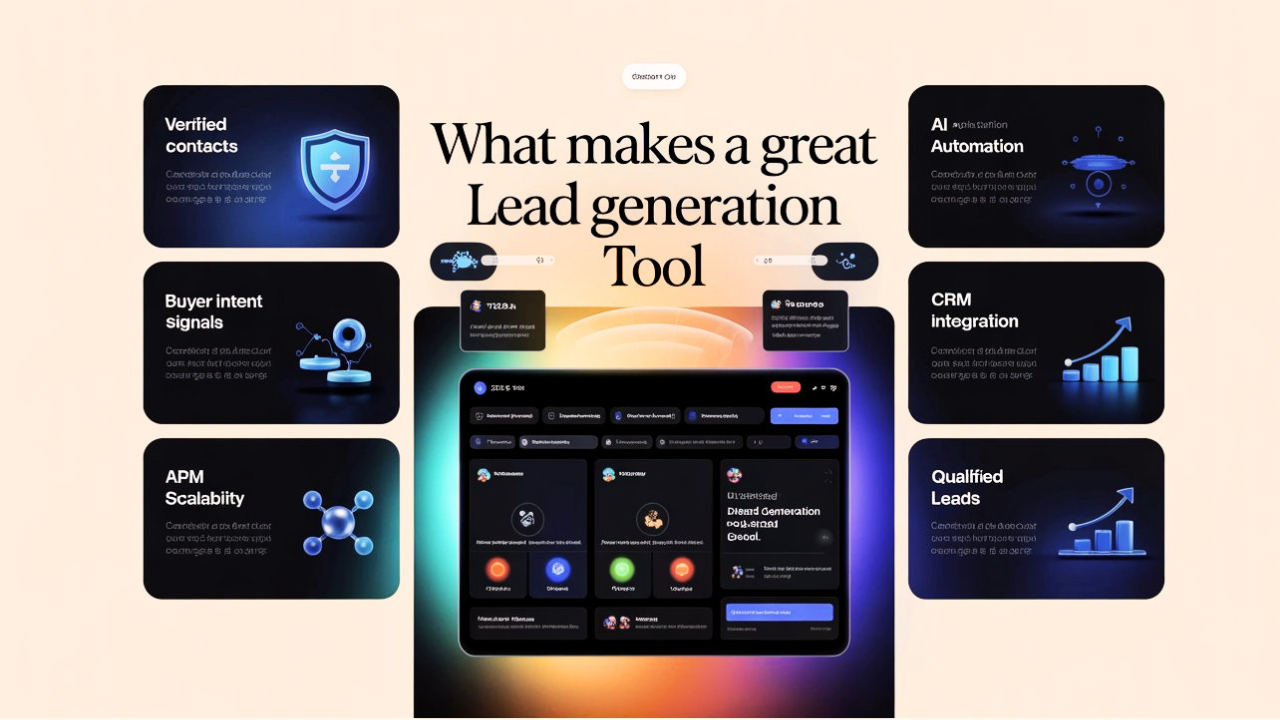
The real filter is workflow fit rather than features. A great lead generation tool earns its place by excelling at one or more of the following:
A. Data Accuracy & Verified Contacts
Bad data kills campaigns faster than bad messaging. Prioritize tools that verify emails and phone numbers before they enter your CRM.
B. Intent Signals & Buyer Behavior
The best tools don't just tell you who might buy, they show you who is actively researching right now, and why this moment matters.
C. Automation & AI Workflows
Manual follow-up is a revenue leak. Tools that automate enrichment, scoring, sequencing, and routing reduce time-to-first-touch dramatically.
D. CRM Integration
Complexity increases when a lead generation tool doesn't integrate well with your CRM. You can look for native integrations with Salesforce, HubSpot, or Pipedrive.
E. Scalability
An effective lead generation tool for a five-person team should expand along with you. Without abruptly moving to enterprise contracts, think about whether pricing and data access scale.
F. Cost Per Qualified Lead
Volume is vanity, so a tool that surfaces 50 high-intent leads beats one that floods your inbox with 5,000 cold contacts that never convert.
Top 7 Lead Generation Tools for Better Conversions
1. Lead2list (The Ad-to-CRM Specialist)

Lead2list is a high-speed automation tool that bridges the gap between Facebook/Instagram Lead Ads and your CRM. It uses direct APIs to "pull" leads the second they are generated, ensuring zero lag time.
Pros
🔼 Lead syncing in real time from Facebook Ads to email and CRM systems
🔼 Faster response times improve conversion rates
🔼 Simple setup with no technical skills required
🔼 Supports targeted Facebook ad workflows
Cons
🔽 Not ideal for outbound B2B prospecting
Ideal for: Marketers running high-volume paid social campaigns who need immediate follow-up.
2. Apollo – All-in-One B2B Prospecting Tool

Apollo is a comprehensive B2B lead generation platform that facilitates prospect discovery, data enrichment, and outreach campaign management all in one location.
It has developed into a comprehensive AI sales platform that integrates prospecting, sequencing, and lead scoring within a single dashboard.
Pros
🔼 Large database with a million contacts
🔼 All-in-one platform for prospecting and outreach
🔼 Built-in email automation and sequencing
🔼 AI-powered personalization and intent filters
🔼 Integrates with tools like HubSpot and Salesforce
Cons
🔽 Advanced AI and intent features are paid
🔽 Support response time can be inconsistent
Ideal for: SDR teams and startups looking for a "one-stop shop" for outbound.
3. ZoomInfo – Intention and Enterprise-Level Data

One of the most potent B2B data platforms, ZoomInfo, is made for businesses that require extensive, trustworthy contact data.
It offers access to millions of business contacts along with advanced insights like intent signals, technographic data, and company structures.
Pros
🔼 Extensive and detailed B2B contact database
🔼 Strong intent data to identify ready-to-buy prospects
🔼 Technographic data for better targeting
🔼 Org charts for decision-maker mapping
Cons
🔽 Expensive compared to other tools
🔽 Requires a dedicated team to use effectively
🔽 Not suitable for small teams or beginners
Ideal for: Enterprise sales teams targeting high-value accounts.
4. LinkedIn Sales Navigator

With the help of a lead generation tool like LinkedIn Sales Navigator, you can find and connect with the right prospects by using advanced filters such as industry, job role, company size, seniority, and location.
It also allows direct messaging through InMail, even without prior connections, helping you reach decision-makers faster.
Pros
🔼 Advanced filters for precise targeting
🔼 Alerts for job changes and company activity
🔼 InMail messaging without needing connections
🔼 Integrates with major CRM tools
Cons
🔽 Limited InMail credits per month
🔽 Does not provide direct emails or phone numbers
Ideal for: Relationship-based selling and high-ticket B2B deals and targeted outreach on LinkedIn.
5. Leadfeeder by Dealfront - Converting Website Visitors into Leads

Visitor tracking, intent data, and lead enrichment are all integrated into Leadfeeder. It can alert your team in real time when a company visits key pages like pricing or demos—making it easier to act at the right moment.
Pros
🔼 Identifies companies visiting your website
🔼 Tracks behavior to highlight high-intent leads
🔼 Real-time alerts for important page visits
🔼 Integrates with CRM, Slack, and analytics tools
Cons
🔽 Focuses on company-level data, not individual users
🔽 Accuracy can vary for smaller businesses or shared IPs
🔽 Needs consistent website traffic for best results
Ideal for: B2B companies with high organic traffic looking to identify warm prospects.
6. seoClarity

Instead of using outbound outreach, the seoClarity platform concentrates on generating leads through organic search.
It helps businesses turn their content into a consistent lead source by improving visibility, rankings, and search performance.
Pros
🔼 AI-driven content optimization and insights
🔼 Tracks visibility across search and AI platforms
🔼 Strong technical SEO audit capabilities
🔼 Supports large teams with scalable features
Cons
🔽 Requires SEO knowledge to use effectively
🔽 Expensive compared to basic tools
🔽 Learning curve for new users
Ideal for: Large brands focused on long-term inbound lead generation.
7. Cognism

This lead generation tool includes AI-powered insights for quick prospect research and intent data to identify companies actively looking for solutions like yours.
Finding and connecting with the right prospects is made simpler by Cognism's robust integrations and quick Chrome extension for LinkedIn.
Pros
🔼 Strong GDPR compliance for global outreach
🔼 AI-powered prospect insights and summaries
🔼 Reliable LinkedIn Chrome extension
🔼 Intent data to target active buyers
Cons
🔽 Expensive compared to other tools
🔽 No built-in outreach or email sequencing
🔽 Data coverage is stronger in Europe than in other regions
Ideal for: Global sales teams requiring high-compliance, high-accuracy European contacts.
Types of Lead Generation Tools: Finding Your Fit
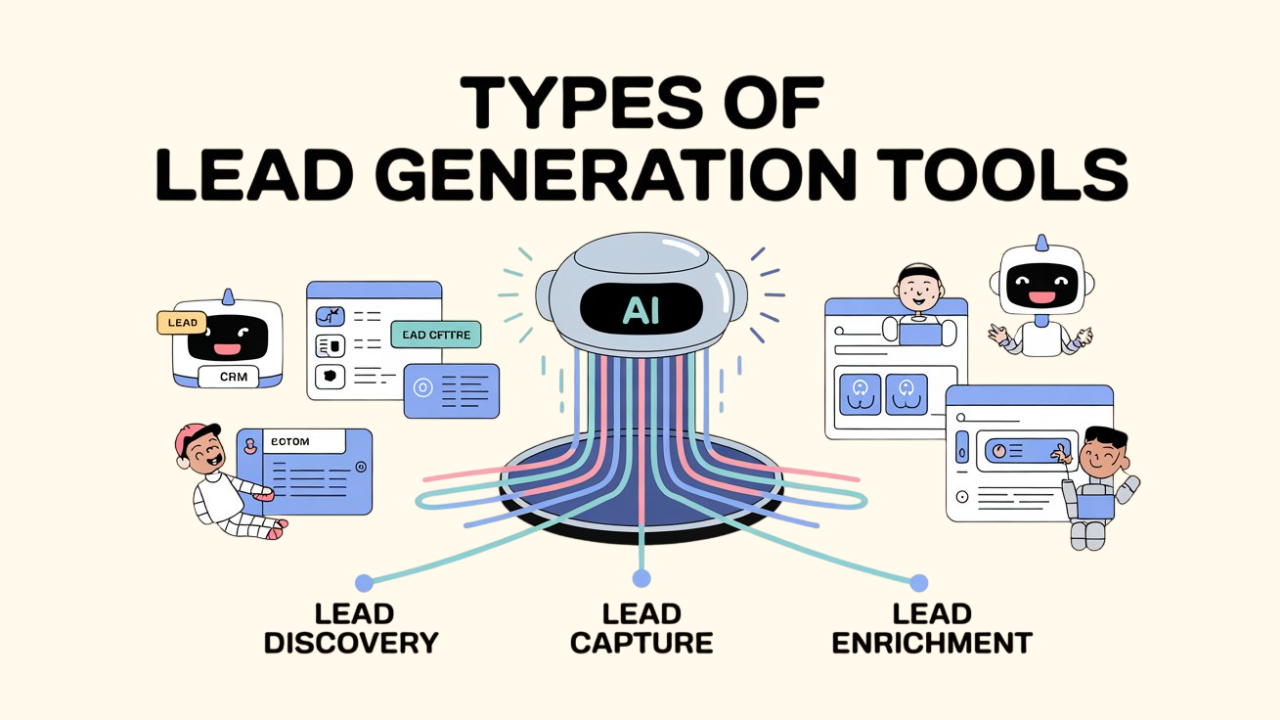
Not all lead generation tools are trying to solve the same problem.
Before choosing, it helps to understand the four core categories and which ones your current stack is actually missing.
1. Lead Discovery Tools
Find new prospects that match your Ideal Customer Profile from large databases or website visitor data.
Tools: Apollo.io & Cognism
2. Lead Capture Tools
Convert existing traffic into contacts through forms, pop-ups, landing pages, chatbots, and ad integrations.
Tools: Lead21ist & HubSpot
3. Lead Enrichment Tools
Add missing data to existing leads, job titles, company size, phone numbers, tech stack, and intent signals.
Tools: Leads API & ZoomInfo
Best Practices for Using Lead Generation Tools Effectively
1. Start with a Clear Goal
Understand the requirements for attracting, capturing, qualifying, and nurturing leads. So choosing the right tool for the right stage saves time and budget.
2. Prioritize Data Quality
AI personalization only scales your mistakes. Verify email addresses, use tools with regular database refreshes, and treat your CRM like a living system, not a graveyard of stale contacts.
3. Capture and Respond to Paid Leads Faster
Speed directly impacts conversions. Leads, especially from paid campaigns, lose value within minutes if not followed up.
In order to respond while intent is still high, tools such as Lead2list instantly capture Facebook Ad leads and push them into your email or CRM workflows.
4. Test Before You Commit
Before acquiring any annual plan, conduct a 14–30 day pilot on a real campaign segment. As your primary metrics, monitor the time to the first qualified lead, the cost per qualified lead, the number of meetings scheduled, and the reply rates.
Conclusion
There’s no single “best” lead generation tool, only the one that fits your workflow, audience, and growth stage.
The winning approach is not about using more tools, but using the right combination. High-performing teams focus on a simple system: one tool for finding leads, one for capturing intent, and one for nurturing and converting them.
If you're just starting out, a focused tool like Lead2list can help you quickly capture and activate high-intent leads, while Apollo.io can support a more comprehensive outbound and automation strategy.
The key is to stay practical:
- Start small
- Focus on lead quality over volume
- Build a system that you can actually manage
Because ultimately, how you use tools determines conversions, not the tools themselves.
FAQs About Lead Generation Tools
Q1: What is the best lead generation tool for small businesses?
A: HubSpot and Lead2List are the top picks for small businesses. HubSpot offers a free CRM with built-in marketing automation, forms, and email workflows, ideal for inbound-focused teams.
Q2: How do I improve lead conversion rates?
A: Focus on targeting the right audience, personalizing outreach, and using automation effectively.
Q3: Can I use multiple tools together?
A: Yes, combining tools often delivers better results than relying on just one.